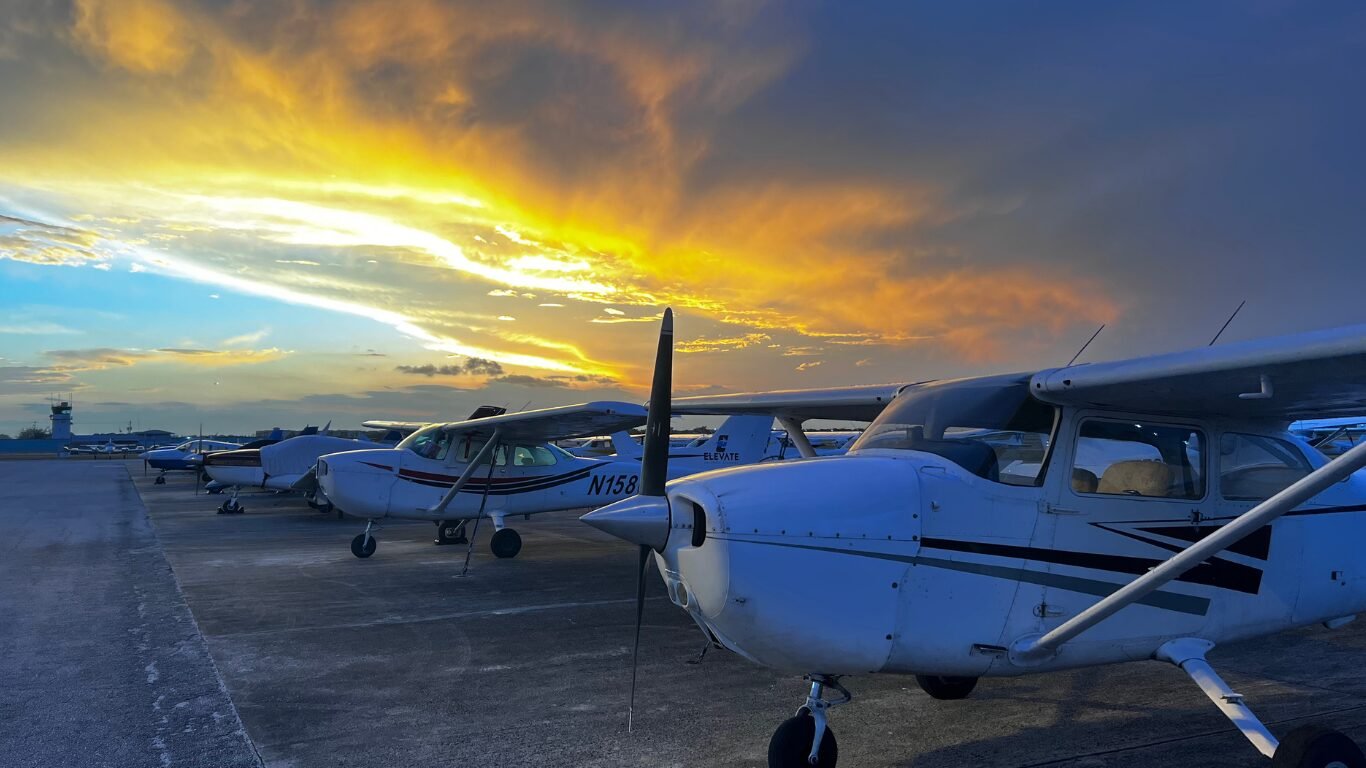
The fastest way to build 1,500 hours is a full-time time building program at $60–$100/hr wet, flying 6–8 hours a day, which puts most pilots at 1,500 hours in 8–12 months for roughly $90,000–$150,000 all-in. Instructing (CFI) costs less out of pocket but takes 18–30 months because you rely on student demand. Banner tow, pipeline patrol, and skydive-jump flying pay you but are geographically limited and rarely add up to 1,500 quickly. This post breaks down every real path with actual numbers.
Why 1,500 Hours Is the Number That Matters
1,500 total flight hours is the FAA minimum for an unrestricted Airline Transport Pilot (ATP) certificate under 14 CFR §61.159, which is what you need to fly right seat at a Part 121 airline. Restricted ATP (R-ATP) drops that to 1,000 hours with a qualifying four-year aviation degree or 1,250 with a two-year degree, but the majority of hiring pilots still target the full 1,500.
After earning a Commercial certificate at roughly 250 hours, you have about 1,250 hours left to build. How you build those hours determines both how fast you get to a regional airline interview and how much cash comes out of your pocket.
Path 1: Full-Time Paid Time Building
This is the fastest path. You rent an aircraft dry or wet, fly cross-country routes, and log Pilot-in-Command hours on your own schedule. At My Flight Time, a Cessna 152 wet rate is $60/hr and a Cessna 172 is around $115/hr wet; multi-engine time in a Beechcraft Duchess starts at $160/hr. Flying 6 hours a day, 6 days a week, a pilot logs ~150 hours per month.
At that pace, going from 250 hours (fresh Commercial) to 1,500 hours takes 8–9 months of dedicated flying. Total aircraft cost at $60/hr = ~$75,000, flown in our company-owned fleet. Add fuel surcharges (already wet), landing fees, and lodging and you land around $90,000–$110,000. See our Time Building Program for exact packages.
Path 2: Flight Instructor (CFI)
Becoming a Certified Flight Instructor costs about $8,000–$12,000 to get the CFI, CFII, and MEI ratings. After that, students pay you — typical CFI rates are $40–$75/hr of instruction, meaning you earn while logging dual-given time (which counts toward ATP).
The catch: you log 3–6 hours a day at a busy school, often 4–5 days a week, which is 60–90 hours a month if the schedule is full. That puts 1,250 hours away at 14–20 months if you never miss a booking. Realistically most CFIs need 18–30 months because of weather, student cancellations, and slow seasons. Your out-of-pocket after the initial ratings is roughly zero, and you may net $30,000–$60,000 in take-home over that period.
Path 3: Shared or Cost-Split Time Building
Two pilots split a wet-rate aircraft, alternating in the left seat. Only PIC time counts toward ATP, so each pilot logs half the total tach time as PIC. The upside: the hourly cost per pilot drops from $60/hr to $30/hr — see current hourly rates. The downside: it takes twice as long calendar-wise unless you fly longer days. Learn more about the mechanics in our shared time building guide.
Path 4: Banner Tow, Skydive, and Pipeline Patrol
These jobs pay you and log turbine or piston PIC. Banner tow pilots at Florida beaches log 40–70 hours/month in summer, roughly $15–$25/hr paid, and add up to 500–800 hours per year if you get a good market. Pipeline patrol in Texas or the Gulf can add 800–1,000 hours annually. Skydive-jump flying is competitive but adds fast time. The problem for most Commercial pilots: these jobs are geographically clustered, seasonal, and the pilot pipeline is full. Waiting six months for a slot is common.
Which Path Is Actually Fastest?
For raw calendar speed, paid time building wins — 8–12 months from Commercial to 1,500 hours is realistic if you commit full-time. CFI-only takes twice as long but costs 60–80% less. A hybrid (instructing 3 days a week, time building 2 days a week) hits 1,500 hours in 12–15 months at moderate cost and is what many students at our Time Building Program choose.
What About R-ATP at 1,000 or 1,250 Hours?
If you graduated from an FAA-approved Part 141 bachelor's program you qualify for R-ATP at 1,000 hours; associate degree qualifies you at 1,250. That knocks 3–7 months off any of the paths above. If you're a career-changer without an aviation degree, 1,500 is your number.
The Total-Cost Comparison
- Full-time paid time building (SEL): ~$90,000–$110,000 out of pocket, 8–12 months.
- Multi-engine focused time building: ~$180,000+ if you build all remaining hours in a twin. Most pilots build 25–50 multi hours and rest in singles.
- CFI-only: ~$10,000 upfront, 18–30 months, breaks even or nets small profit.
- Shared time building: ~$45,000–$55,000 per pilot, 10–14 months.
- Banner/pipeline: near-zero cost, 12–18 months, geographically restrictive.
Ready to Start Building Hours?
My Flight Time runs 12 hours a day, 7 days a week from KFXE Fort Lauderdale, with the best rates in the US and a company-owned fleet maintained by our in-house 24/7 team. Whether you're going for R-ATP at 1,000 hours or full ATP at 1,500, book a call and we'll build you a schedule that hits your date.
Frequently asked questions
What is the fastest realistic way to reach 1,500 hours?
Flying 4 to 6 hours a day in a shared, block-rate aircraft gets most pilots from 250 to 1,500 hours in roughly 8 to 12 months. Anything advertised as faster usually assumes perfect weather, zero maintenance downtime, and unlimited funding.
Do all 1,500 hours have to be in an airplane I rent?
No. Instruction given, safety-pilot time, ferry flights, banner towing, and pipeline patrol all count toward total time. Most pilots blend two or three of these with paid time building to control cost.
How many hours per week should I plan to fly?
Thirty to thirty-five hours a week is the sustainable ceiling for most pilots once you account for preflight, fuel stops, fatigue, and weather. Pushing beyond that tends to produce cancellations rather than logbook entries.